


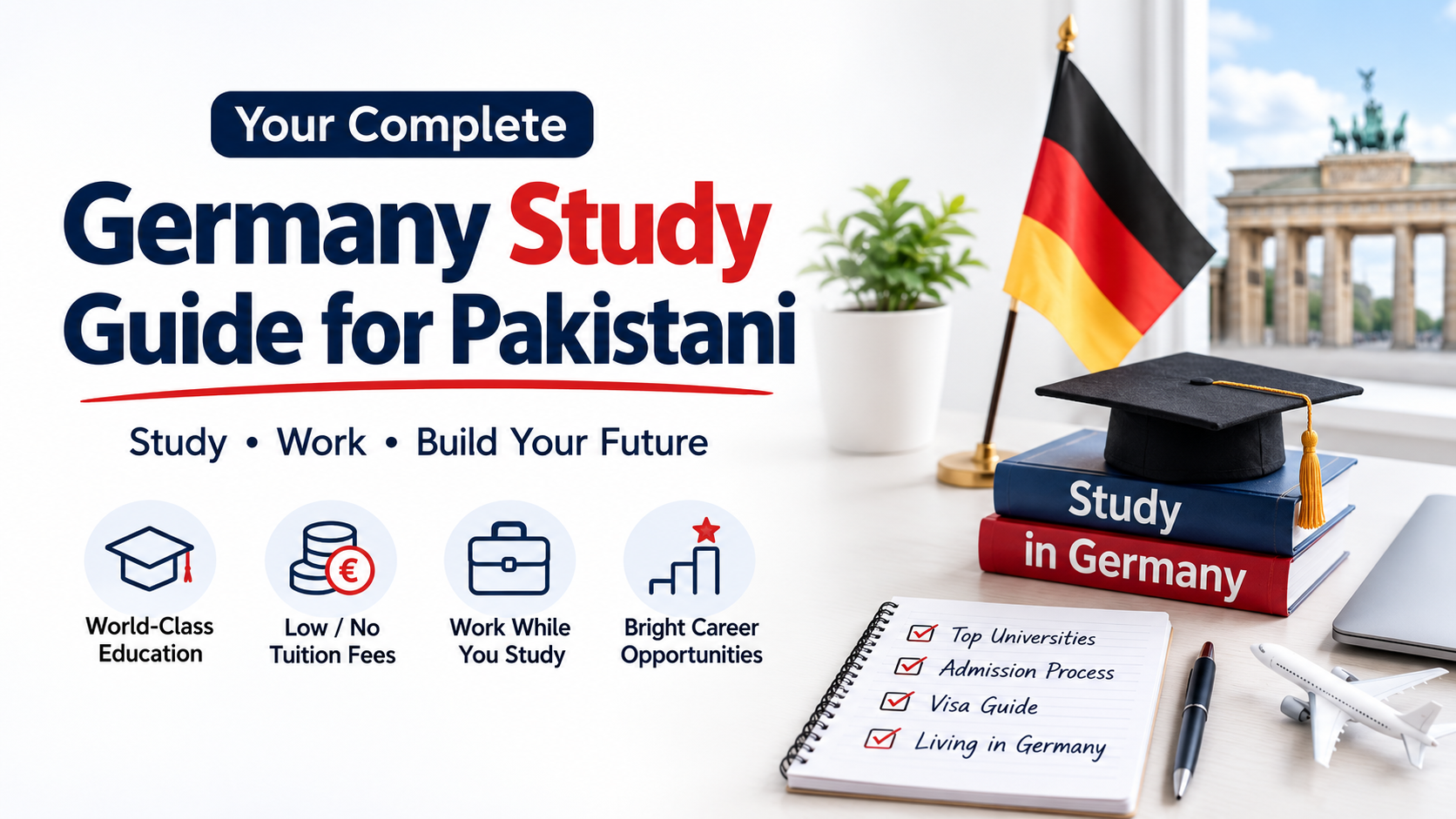
Imagine world-class engineering degrees, near-zero tuition fees, and the longest post-study work visa in all of Europe , all within reach. That is the exciting reality when you study in Germany for Pakistani students. Germany hosts over 400,000 international students, making it the third most popular study destination on the planet, with nearly 9,800 Pakistani students already enrolled and thriving.
Here is what makes Germany truly special: most public universities charge no tuition, the country holds a stellar academic reputation in STEM fields, you can work while you study, and graduates enjoy Europe’s most generous post-study pathway. This guide walks you through everything , from eligibility and costs to the visa process and life after graduation. Let’s get started!
Why Germany Is an Ideal Destination for Pakistani Students
Germany is not just an aspirational dream , it is a smart, financially rational choice. While many students look toward expensive destinations, Germany offers a rare combination of quality and affordability that few countries can match.
Consider the big picture. Germany ranks as the third most popular study destination worldwide, with more than 400,000 international students enrolled. Three things make it stand out:
- No tuition at most public universities
- Europe’s longest post-study work visa , a full 18 months to find a job
- One of the EU’s fastest permanent residence pathways for graduates
Germany is especially strong in engineering, computer science, and natural sciences , the exact fields so many Pakistani students want to pursue. With the right preparation, studying in Germany from Pakistan is a completely achievable goal, not an out-of-reach fantasy. You just need a clear plan, and that’s exactly what you’ll find below.
Understanding Tuition Fees and Semester Costs
You have probably heard that German education is “free.” That is mostly true , but let’s clear up the details so you can budget accurately.
Most public universities charge zero tuition. Instead, you pay a small semester contribution of €150–400, which often includes a public transport pass. That’s an incredible deal!
There are a few important exceptions to know before you apply:
- Baden-Württemberg: Non-EU students pay €1,500 per semester at public universities, such as the University of Stuttgart.
- TU Munich (Bavaria): Introduced fees of €2,000–€6,000 per semester for non-EU students starting Winter 2026/25.
If you don’t meet the academic thresholds for public universities, private institutions are an alternative, though they charge €6,000–€15,000 per year.
One golden rule: always verify the tuition status on the DAAD course database or the specific university programme page before you build your budget. Fees can change, so check the source directly.
Academic Requirements for Pakistani Students
Here’s where many students get confused, so let’s make it simple. Germany requires 13–14 years of education for university admission.
What this means for you:
- FSc alone (12 years) does not qualify for direct admission.
- FSc + 1 year of a BS programme in Pakistan, or A-Levels (13 years), qualifies you for direct entry.
- If you don’t have that extra year, you can complete a Studienkolleg , a one-year foundation course in Germany , to bridge the gap.
Undergraduate requirements: Aim for a minimum of 85% for competitive public universities. Private institutions often accept lower marks.
Postgraduate requirements: You’ll need a 4-year Bachelor’s degree, a minimum 3.0+ CGPA, and ECTS credit alignment with your target programme.
Study gaps: If you have a gap of 2 or more years, be ready to provide documented justification , a clear explanation goes a long way.
Meeting these requirements is absolutely doable with the right academic preparation and guidance. Thousands of Pakistani students do it every year, and so can you!
Language Proficiency Requirements
Good news , language requirements are programme-specific, not universal. Your path depends entirely on the programme you choose.
German-taught programmes: These typically require B1–B2 German, proven through TestDaF, DSH-2, or Goethe certificates. Most public undergraduate programmes fall into this category.
English-taught programmes: These usually require IELTS 6.5 or TOEFL 90+. English-taught options are increasingly available at the Master’s level.
Some universities accept a Medium of Instruction (MOI) letter instead of IELTS , but you must verify this with each university individually. Never assume.
Here’s a friendly heads-up: most Pakistani students take 6–12 months to reach B1 level in German. So start early! Building your language skills now is one of the smartest moves you can make. IML Institute’s German language courses and IELTS preparation in Lahore are the perfect starting point to get you exam-ready with confidence.
Financial Requirements and the Blocked Account
To get your student visa, you’ll need to prove you can support yourself. This is where the blocked account (Sperrkonto) comes in.
A blocked account holds your funds in a German account you can access gradually once you arrive. The current official requirement is €11,904 per year (€992 per month), and this figure is reviewed annually.
Approved providers include Fintiba, Expatrio, and Deutsche Bank. Note that Coracle paused new applications in 2025 , always verify a provider is active before applying.
Here’s the full cost picture so nothing surprises you:
| Cost Category | Estimated Amount |
| Blocked Account | €11,904 + ~€100–200 provider fees |
| Health Insurance (under 30) | ~€110–120/month |
| Accommodation | €300–800/month |
| Visa Fee | €75 |
| Document Attestation | PKR 15,000–30,000 |
| Flight (one-way) | PKR 250,000–350,000 |
Two crucial reminders: health insurance is mandatory and is not covered by the blocked account, so budget for it separately. And since PKR figures shift with exchange rates, always budget on the higher end to stay safe.
Top German Universities for Pakistani Students
Ready to picture yourself on campus? These are the universities Pakistani students most commonly target, especially in STEM fields:
- TU Munich – engineering, computer science, natural sciences (note: now charges non-EU tuition)
- RWTH Aachen – mechanical and electrical engineering
- TU Berlin – computer science and engineering
- University of Stuttgart – engineering-focused (note: in Baden-Württemberg, so non-EU fees apply)
- University of Bonn – mathematics and natural sciences
Don’t stop at this list! Use the DAAD course database to explore all 20,000+ programmes and filter by language, tuition status, and admission type. It’s your best friend during the research stage.
One more tip: look for NC-frei programmes , these have no fixed grade cutoff, making them an excellent target if your GPA is on the lower side. There truly is a spot for every prepared student.
Step-by-Step Application Process
The process is straightforward when you break it into clear steps. Here’s your roadmap:
- Research programmes on DAAD and shortlist 6–8 options.
- Prepare documents: transcripts, language certificates, motivation letter, CV, and recommendation letters.
- Attest academic documents through the correct chain , IBCC for Matric/Inter → MOFA; HEC for Bachelor’s → MOFA.
- Submit applications via Uni-Assist (€75 first application, €30 each additional) or direct university portals.
- Receive your admission letter (Zulassungsbescheid).
- Open a blocked account.
- Apply for your student visa.
Application Timeline for the Winter Intake (September/October)
- 12–18 months before: Research programmes, start learning German, take IELTS.
- 6–8 months before: Begin document attestations.
- February–March: Applications open and close.
- July–August: Submit your visa application.
- September–October: Travel and begin your studies!
Follow this timeline and you’ll stay ahead of every deadline. Preparation is everything.
Visa Requirements and Documentation Checklist
You’ll apply for your German student visa at the German Embassy in Islamabad or the Consulate General in Karachi. Here is exactly what you need to bring:
- Valid passport (issued within 10 years, 2+ blank pages)
- University admission letter
- Blocked account confirmation (€11,904)
- Health insurance proof
- Attested academic documents
- Language certificate (IELTS or German proficiency)
- Visa Statement of Purpose
- CV (Europass format preferred)
- Biometric photographs
- Visa fee payment (€75)
Processing typically takes 4–8 weeks, so book your biometric appointment early , especially during the busy June–August peak season.
One critical reminder: do not book your flights until the visa stamp is physically in your passport. It’s the safest way to protect your money and your plans.
Work Opportunities During Studies
Here’s exciting news for your budget. As of March 2026, under the Skilled Immigration Act, student work rights have expanded. You can now work:
- 140 full days or 280 half-days per year, or
- A flat 20 hours per week year-round
That’s a real improvement over the old 120-day rule!
The earning potential is solid too. Germany’s minimum wage is €13.90/hour, and Werkstudent (working student) positions typically pay €15–20/hour. These part-time roles can meaningfully offset your living costs.
Just remember: exceeding your work limit can put your visa status at risk. Track your days carefully and stay within the rules , it’s simple once you’re organized.
DAAD Scholarships and Other Funding Opportunities
Think scholarships are only for private universities? Not true! Some of the best funding is available for students at public universities.
Key DAAD scholarship options for Pakistani students:
- DAAD Study Scholarships (Master’s): Full funding including a €934/month stipend, travel allowance, and health insurance.
- EPOS Programme: For professionals from developing countries; requires 2+ years of work experience.
- Helmut-Schmidt Programme: For Public Policy and Good Governance.
There are also political foundation scholarships worth exploring, including Heinrich Böll, Konrad-Adenauer-Stiftung, and Rosa Luxemburg Stiftung.
Don’t forget the Deutschlandstipendium: €300/month available at participating universities based on academic merit and personal circumstances.
Here’s the wise approach: treat scholarships as a bonus, not a guarantee. Always budget as though you’ll receive no scholarship. That way, any funding you win is a happy addition to your plan.
Post-Study Work Visa and PR Pathway
This is where Germany really shines. It offers the longest post-study work visa in Europe , a full 18 months to find a qualified job after graduation.
During those 18 months, you can work any job without hour restrictions and change employers freely. That’s genuine flexibility while you launch your career.
The PR fast-track for German degree holders:
- 2 years on a skilled worker permit
- 24 months of pension contributions
- B1 German certificate
- Pass the “Living in Germany” test
The EU Blue Card is another excellent route worth considering once you land a qualifying job with a strong salary.
One piece of advice: start your job search from your very first semester. Eighteen months passes quickly, and the earlier you build your network and gain experience, the smoother your transition to permanent residence will be.
Conclusion: Your German Journey Starts Now
Germany brings together everything a Pakistani student could want: near-zero tuition, world-class academics, generous work rights during study, and Europe’s best post-study pathway. Yes, the process involves multiple steps and careful preparation , but it is completely achievable with the right guidance.
Start with the two most time-sensitive steps: academic document attestation and language preparation (German or IELTS). These take the longest, so beginning now puts you far ahead of the crowd.
Ready to take that first step? Contact IML Institute’s advisors in Lahore for expert guidance on German language courses and IELTS preparation. These are the essential foundations of a strong German university application , and the perfect place to begin your journey to Germany!
Frequently Asked Questions
Is studying in Germany really free for Pakistani students?
Most public universities charge no tuition , only a semester contribution of €150–400. However, exceptions apply in Baden-Württemberg and at TU Munich. Always verify before applying.
Can I go directly to a German university after FSc?
Not typically. FSc is a 12-year qualification, and Germany requires 13. You’ll need FSc + 1 year of university in Pakistan, or A-Levels, or you must complete a Studienkolleg in Germany.
Do I need to learn German to study in Germany?
It depends on the programme. Most public undergraduate programmes are German-taught and require B2/C1. Many Master’s programmes are available in English, requiring IELTS 6.5.
How much money do I need to apply for a German student visa?
You need €11,904 in a blocked account to satisfy visa requirements, plus funds for health insurance, the visa fee, attestation, and flights.-
Can I work while studying in Germany?
Yes! As of March 2026, you can work 140 full days or 280 half-days per year, or up to 20 hours per week year-round.
How long does it take to get a German student visa from Pakistan?
Typically 4–8 weeks after submitting your biometric application. Apply as early as possible , peak season (June–August) can extend processing times.
What IELTS score do I need for German universities?
Most English-taught programmes require IELTS 6.5. Some universities accept a Medium of Instruction letter , always verify with the specific programme.