


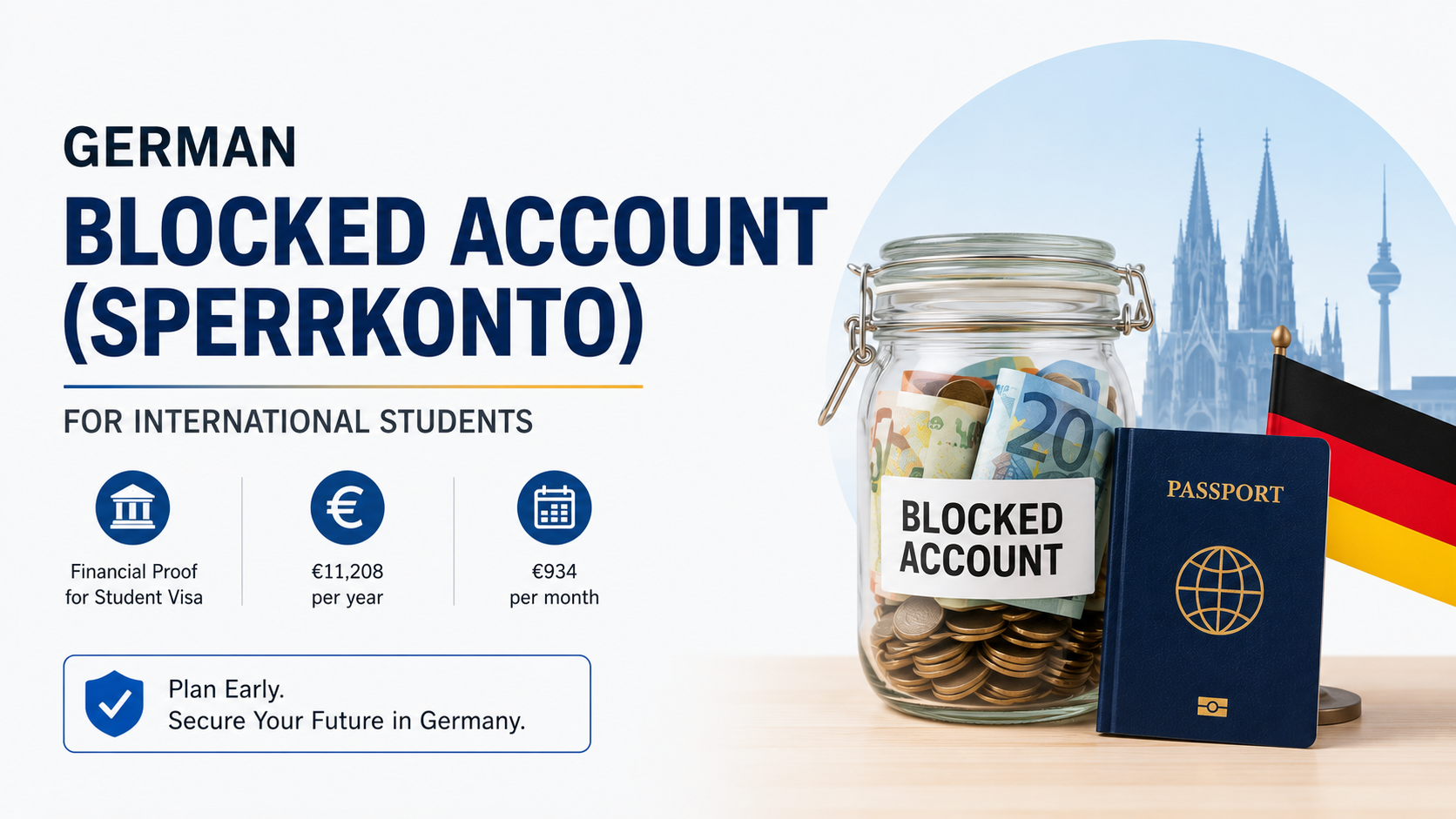
Planning to study in Germany means gathering a lot of paperwork, and one requirement tends to raise more questions than any other: the blocked account, or Sperrkonto. If you have been preparing for your Germany journey with IML Institute or researching the student visa process on your own, you have likely come across this term and wondered what it actually involves, how much money you need to set aside, and which provider to trust with your funds.
It can feel confusing at first, especially when you are managing applications, admission letters, and travel plans all at once. The good news is that once you understand how a blocked account works, the process becomes straightforward. This guide walks you through every step, from what the account is to how you manage your money after you arrive.
What Is a Blocked Account?
A blocked account is a special type of bank account that international students use to prove they can support themselves financially while studying in Germany. The word “blocked” describes exactly how it works: you deposit a set amount of money in advance, and that money stays locked. You can only withdraw a limited amount each month once you arrive in the country.
Think of it as a savings account with rules. The German authorities want to see that you have enough money to cover your living costs for at least your first year, without needing to work full time or rely on outside help. The blocked account gives them that proof in a clear, verifiable way.
Understanding this purpose early helps you approach the rest of the process with confidence, so let’s look at why it matters for your visa.
Why a Blocked Account Is Required for Your Student Visa
If you come from a country outside the European Union, you usually need a student visa or residence permit to study in Germany. As part of that application, you must show proof of financial resources, known as Finanzierungsnachweis. The blocked account is the most common and widely accepted way to meet this requirement.
Without this proof, your visa application will not move forward. German embassies and consulates treat the blocked account as reliable evidence that you can pay for rent, food, transport, insurance, and other daily expenses during your studies. It protects both you and the system, because it confirms you can settle in and focus on your education rather than face financial trouble in a new country.
Knowing why the requirement exists makes the deposit amount easier to understand, so let’s cover the numbers next.
How Much Money Do You Need?
For 2026, the standard amount required is approximately 11,208 EUR per year, which works out to about 934 EUR per month. This figure is set by the German government and is reviewed regularly, so it can change from year to year. Always confirm the current amount on the website of the German mission in your home country before you transfer any funds.
This monthly figure is not random. It reflects the estimated minimum a student needs to cover basic living costs across most German cities. Some students choose to deposit a little more than the minimum to give themselves breathing room, especially if they plan to live in an expensive city such as Munich or Frankfurt.
Once you know how much to prepare, the next question is usually where to open the account, so let’s look at the main providers.
Which Providers Offer Blocked Accounts?
You have several trusted options, and each works slightly differently. Comparing them helps you choose the one that fits your timeline and budget.
- Fintiba: A popular online provider known for a quick, fully digital setup. Fintiba often bundles the blocked account with health insurance, which many students find convenient.
- Expatrio: Another digital provider offering a combined package of a blocked account and health insurance. The application is done entirely online, which suits students who want to avoid paperwork.
- Coracle: A German provider that offers blocked accounts along with helpful support for students, including guidance during the visa process.
- Deutsche Bank: A traditional, well-established bank that offers blocked accounts. The process usually involves more paperwork and a longer setup time, but some students prefer the security of a major bank.
When comparing providers, look closely at three things: the opening fee, any monthly maintenance charges, and how long the account takes to activate. Digital providers tend to be faster, while traditional banks may take several weeks.
With a provider in mind, you can move on to the actual steps of opening your account.
Step-by-Step: How to Open a Blocked Account
Opening a blocked account follows a clear sequence. Here is how the process usually works.
- Choose your provider. Compare fees, processing times, and whether the package includes health insurance. Pick the option that matches your needs.
- Complete the online application. You will enter personal details such as your name, address, passport information, and study plans.
- Verify your identity. Most providers use a video verification call or a photo-based check. You will need a valid passport for this step.
- Receive your account details. Once approved, the provider sends you the account information and a confirmation document.
- Transfer the required funds. Send the full amount, around 11,208 EUR, into the blocked account. Bank transfers can take a few business days, so plan ahead.
- Get your blocking confirmation. After the money arrives, the provider issues a confirmation letter. This is the document you submit with your visa application.
Once you have that confirmation letter in hand, you are ready to complete your visa application with a solid financial proof attached. From there, your attention shifts to using the account once you reach Germany.
Understanding Monthly Withdrawal Limits
After you arrive in Germany and register your local address, you activate your blocked account and connect it to a regular German current account. The blocked amount is then released to you in equal monthly portions rather than all at once.
For the 2026 requirement, this means you can withdraw roughly 934 EUR per month. You cannot take out more than the monthly limit, even if you face an unexpected expense. This structure is intentional, because it ensures your funds last across the full year and cover your living costs steadily.
Knowing this limit in advance helps you plan a realistic monthly budget, which leads naturally to how you manage your money once you settle in.
Tips for Managing Your Funds
Living on a fixed monthly amount takes some planning, especially in your first few months when setup costs like a rental deposit and furniture can add up. A few habits make it easier.
- Build a simple budget. Divide your monthly withdrawal across rent, groceries, transport, insurance, and personal spending. Knowing where your money goes reduces stress.
- Set aside a small buffer. If you can, keep a little from each month unspent. This buffer helps with occasional larger costs.
- Track your spending. A basic notes app or budgeting tool shows you patterns and helps you adjust before you run short.
- Look into student discounts. Many transport services, museums, and software providers offer reduced rates for students. These small savings add up over a year.
- Consider part-time work. International students in Germany can usually work a limited number of hours. This can supplement your monthly funds, though you should confirm the current rules for your visa type.
With steady habits in place, you can focus on your studies instead of worrying about money. Still, a few common errors trip up new students, so let’s cover those before you begin.
Common Mistakes to Avoid
Learning from mistakes others have made can save you time and stress. Keep an eye out for these.
- Waiting too long to start. Opening the account and transferring funds can take several weeks. Begin early so you are not rushed before your visa appointment.
- Depositing the wrong amount. The required figure changes over time. Confirm the current amount before you transfer, and avoid sending less than the minimum.
- Ignoring transfer fees and exchange rates. International transfers can carry hidden costs. Factor these in so the full required amount actually lands in your account.
- Choosing a provider without checking recognition. Make sure your chosen provider is accepted by the German embassy handling your application. Most major providers are, but it is worth confirming.
- Forgetting to activate the account after arrival. Your funds stay locked until you complete the activation steps in Germany. Handle this soon after you register your address.
Avoiding these missteps keeps your financial proof clean and your visa process smooth, which puts you in a strong position to start your studies.
Your Next Step
Setting up a blocked account is one of the more practical parts of moving to Germany, and once you understand it, the requirement stops feeling like a hurdle and starts feeling like a checklist you can work through. You now know what the account is, why it matters, how much to deposit, where to open it, and how to manage the money once you arrive.
The best move you can make today is to compare providers and confirm the current required amount with your local German mission. Start early, keep your documents organized, and give yourself enough time before your visa appointment. If you have questions at any stage, IML Institute can guide you through the blocked account process alongside German language preparation and other key requirements for studying in Germany. With that groundwork in place, you can turn your attention to what matters most: preparing for your studies and your new life in Germany.
Frequently Asked Questions (FAQs)
Is a blocked account mandatory for a German student visa?
Yes. For most international students, including Pakistani students, a blocked account is the most widely accepted way to prove you have enough financial resources to support yourself while studying in Germany. Without valid financial proof, your student visa application may not be approved.
How much money is required in a German blocked account in 2026?
For 2026, the required amount is approximately €11,208, which allows you to withdraw around €934 per month. Since the required amount may change, always verify the latest figure with the German Embassy or Consulate before transferring your funds.
Which blocked account provider is best for Pakistani students?
Some of the most trusted blocked account providers are Fintiba, Expatrio, Coracle, and Deutsche Bank. Compare processing times, account fees, customer support, and additional services like health insurance before choosing the provider that best fits your needs.
How long does it take to open a German blocked account?
The process can take anywhere from a few days to several weeks, depending on the provider, identity verification, and international bank transfer times. Starting early helps prevent delays in your university enrollment and visa application.
Can I withdraw all the money from my blocked account at once?
No. A blocked account is designed to release only a fixed monthly amount after you arrive in Germany and activate the account. This ensures you have sufficient funds to cover your living expenses throughout your first year of study.
Can I get help with the blocked account and Germany student visa process?
Yes. If you need guidance with choosing a blocked account provider, preparing your visa documents, or planning your study journey, IML Institute can assist you with the blocked account process, German language preparation, and other requirements for studying in Germany.