


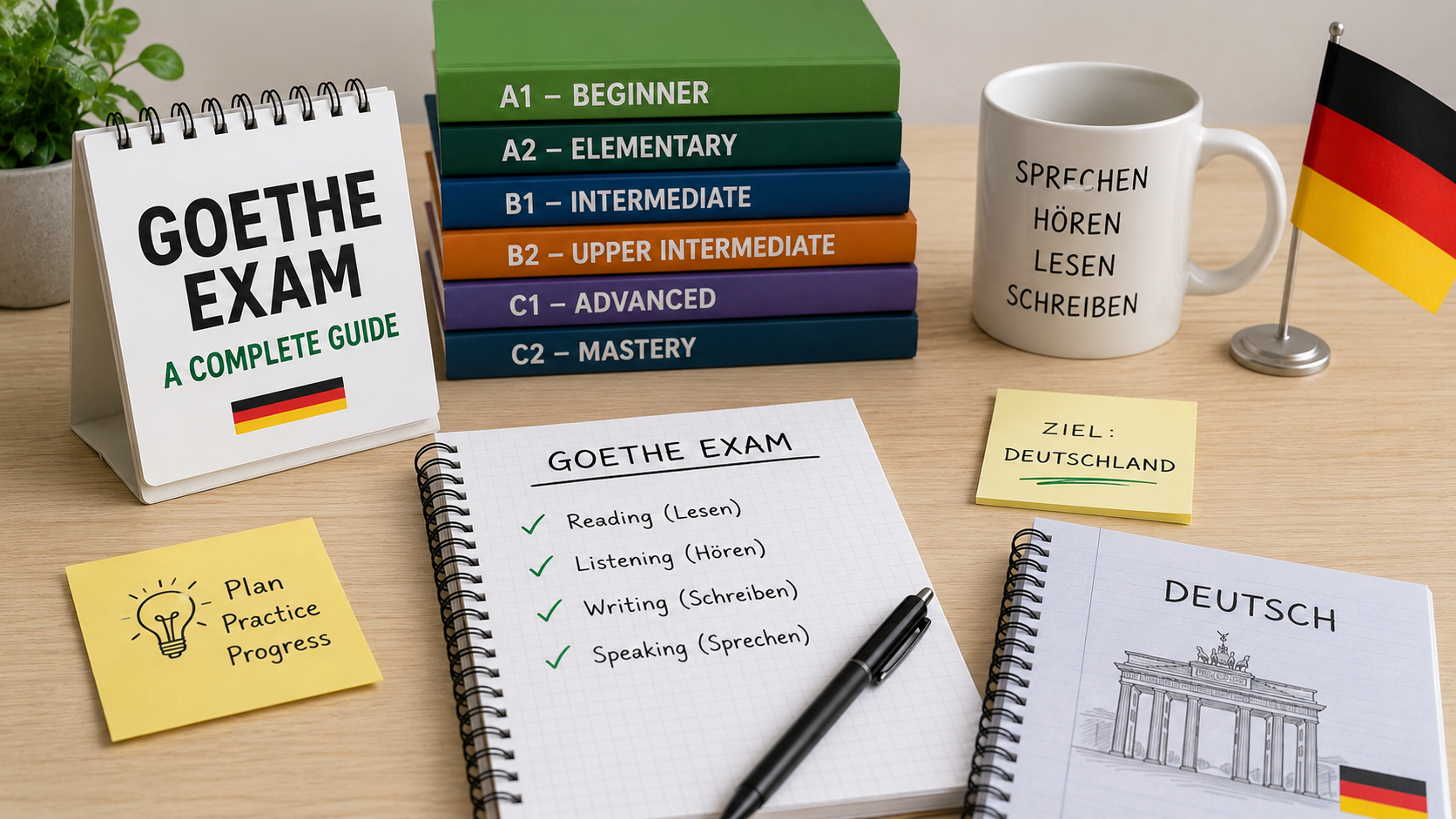
Dreaming of studying, working, or building a new life in Germany? Your journey almost always begins with one important milestone: proving your German language skills through the Goethe-Institut exam. For thousands of Pakistani students, this exam is the key that unlocks university admissions, work opportunities, and study visas.
If you feel unsure about where to start, you are not alone. In this guide, you will learn exactly what the Goethe exam is, the different levels you can take, how to register, and the smartest ways to prepare. By the end, you will have a clear roadmap and the confidence to take your next step toward Germany.
Here’s a quick preview of what we’ll cover:
- What the Goethe exam is and why it matters
- The CEFR levels explained (A1 to C2)
- A step-by-step registration process
- Proven preparation tips and study resources
- How the exam connects to your visa and study-abroad goals
Let’s begin.
What Is the Goethe-Institut Exam?
The Goethe-Institut is Germany’s official cultural institute, recognized worldwide for teaching and certifying German language skills. When you pass a Goethe exam, you receive a certificate that universities, employers, and embassies across the globe accept as proof of your German proficiency.
For Pakistani students, this certificate carries real weight. German universities often ask for it during admissions. The German embassy frequently requires it for student and family reunion visas. In short, it’s one of the most trusted ways to show you can communicate in German.
The exam tests four core skills:
- Reading (Lesen)
- Listening (Hören)
- Writing (Schreiben)
- Speaking (Sprechen)
Each skill matters, so balanced preparation is essential. You cannot rely on strong grammar alone if your speaking and listening need work.
Why the Goethe Exam Matters for Your Future
Learning German is about more than passing a test. It’s an investment in your future. Here’s why the Goethe exam holds such importance for students planning to move to Germany.
University admissions. Many German bachelor’s and master’s programs are taught in German. To qualify, you often need a B1, B2, or even C1 certificate, depending on the course.
Student and residence visas. The German embassy in Islamabad regularly asks for a language certificate as part of the visa process. An A1 certificate is commonly required for family reunion visas, while higher levels support study and work applications.
Job opportunities. Germany has a growing demand for skilled workers, including nurses, engineers, and IT professionals. Strong German skills make you far more competitive in the job market.
Everyday life. Beyond paperwork, speaking German helps you settle in, make friends, and feel at home in a new country. Confidence in the language turns a stressful move into an exciting adventure.
Now that you understand why it matters, let’s look at the exam levels.
Understanding the Goethe Exam Levels (A1 to C2)
The Goethe exam follows the Common European Framework of Reference for Languages, known as the CEFR. This framework divides language ability into six levels. Knowing where you fit helps you choose the right exam and set realistic goals.
A1 – Beginner
At this level, you can introduce yourself, ask simple questions, and understand basic phrases. A1 is often the first requirement for family reunion visas. It’s the perfect starting point if you’re new to German.
A2 – Elementary
You can handle simple, routine tasks and describe your background, immediate environment, and daily needs. A2 builds directly on A1 and prepares you for more complex communication.
B1 – Intermediate
This is a major milestone. At B1, you can manage most situations while traveling, describe experiences, and explain your opinions. Many vocational programs and some universities accept B1 for admission.
B2 – Upper Intermediate
Here you can understand complex texts and interact with native speakers fairly comfortably. B2 is a common requirement for university study and skilled work in Germany.
C1 – Advanced
At C1, you can use German flexibly for academic and professional purposes. Top universities and demanding careers often ask for this level.
C2 – Mastery
This is near-native fluency. You can understand almost everything and express yourself precisely. C2 suits those aiming for advanced academic or professional roles.
Quick tip: Most Pakistani students planning to study in Germany aim for B1 or B2. Check your specific university or visa requirement before choosing your target level.
How to Register for the Goethe Exam
The registration process is simpler than many students expect. Follow these steps to secure your exam spot.
- Choose your level. Confirm which level your university, employer, or visa requires.
- Find an official exam center. The Goethe-Institut and its partner centers offer exams in major cities. Reputable German classes in Lahore can guide you toward the correct center.
- Check available dates. Exam dates fill up quickly, so book early. Popular levels like A1 and B1 tend to sell out fast.
- Complete the online registration. Fill in your personal details carefully. Your name must match your passport exactly.
- Pay the exam fee. Fees vary by level, with higher levels usually costing more. Keep your payment receipt safe.
- Receive your confirmation. You’ll get details about the date, time, and venue. Note them down and plan to arrive early.
Common mistake to avoid: Waiting until the last minute to register. Give yourself enough time to prepare and to secure your preferred date.
Smart Preparation Tips for Goethe Exam Success
Good preparation is the difference between guessing and knowing. These practical tips will help you study effectively and walk into the exam room with confidence.
Build a Consistent Study Routine
Language learning rewards consistency more than cramming. Study a little every day rather than a lot once a week. Even 30 to 45 focused minutes daily can produce strong results over time.
Practice All Four Skills
Many students focus only on grammar and reading because they feel safer. But the exam tests speaking and listening too. Balance your practice so no skill gets left behind.
- Listening: Watch German videos, podcasts, and news with subtitles.
- Speaking: Practice out loud daily, even if you talk to yourself.
- Reading: Read short articles, stories, and simple news.
- Writing: Write short emails, descriptions, and opinions regularly.
Use Official Practice Materials
The Goethe-Institut publishes free sample papers for every level. These show you the exact exam format and question types. Practicing with real materials removes surprises on exam day.
Take Timed Mock Tests
Sitting a full practice exam under timed conditions builds stamina and confidence. It also helps you spot weak areas so you know where to focus your energy.
Learn from a Structured Course
Self-study works for some, but many students progress faster with guidance. A well-designed German language course in Lahore gives you a clear curriculum, expert feedback, and speaking practice with teachers and classmates. This structure keeps you motivated and on track.
Best Study Resources for the Goethe Exam
You don’t have to prepare alone. A mix of the right resources makes your study time far more effective. Here are some tools worth adding to your routine.
- Goethe-Institut website: Free sample tests, exam guidelines, and level descriptions.
- Textbooks: Popular series like Menschen, Netzwerk, and Aspekte follow the CEFR levels closely.
- Language apps: Apps help you build vocabulary and practice grammar during short breaks.
- YouTube channels: Many free channels explain German grammar and daily conversation clearly.
- Flashcards: Digital or paper flashcards are excellent for memorizing new words.
- Language partners: Practicing with a partner improves your speaking and listening quickly.
Pro tip: Combine one core textbook with daily listening and regular speaking practice. This balanced approach covers all four skills naturally.
Common Mistakes Students Make (and How to Avoid Them)
Learning from others’ mistakes saves you time and stress. Watch out for these common pitfalls.
- Ignoring speaking practice. Speaking often feels intimidating, so students skip it. Face it early and practice daily.
- Memorizing without understanding. Learn how grammar works, not just what the rules say.
- Underestimating listening. Native speakers talk fast. Train your ears well before exam day.
- Skipping mock tests. Without practice exams, the real thing feels overwhelming.
- Choosing the wrong level. Always confirm the exact level your visa or university requires.
Avoiding these mistakes puts you ahead of many other candidates.
How the Goethe Exam Supports Your Study and Visa Journey
Let’s connect everything back to your bigger goal: reaching Germany. Your Goethe certificate is not just a piece of paper. It’s a document that opens doors at every stage of your journey.
When you apply to a German university, admissions teams want proof you can follow lectures and complete coursework in German. Your certificate provides that proof. When you apply for a student visa at the German embassy, your language certificate strengthens your case and shows you’re serious about your studies.
For families, an A1 certificate often supports reunion visa applications. For professionals, a B1 or B2 certificate boosts job prospects in Germany’s skilled-worker sectors. Each level you achieve moves you closer to your dream.
This is why proper Goethe exam preparation matters so much. A strong certificate reflects real ability, and that ability will serve you long after you arrive in Germany.
Your Next Step Toward Germany
The Goethe exam may feel like a big challenge, but it’s completely achievable with the right plan. You now know the exam levels, the registration steps, the best study resources, and the mistakes to avoid. More importantly, you understand how each step connects to your goal of studying or living in Germany.
Every fluent German speaker once started as a beginner, just like you. With consistent practice, the right resources, and expert support, you can earn your certificate and open the door to a world of opportunity.
Ready to begin your Goethe exam preparation? Enroll in a structured German language course in Lahore today, and take your first confident step toward your future in Germany. Your journey starts now.
Frequently Asked Questions
How long does it take to prepare for a Goethe level?
It depends on your starting point and study time. With consistent effort, many students move up one level in three to four months. Structured German classes in Lahore at iml institute can help you progress steadily.
Which level do I need to study in Germany?
Most universities ask for B1, B2, or C1, depending on the program. Always check the specific requirement for your chosen course.
Can I retake the exam if I don’t pass?
Yes. You can register again for the next available date. Use the experience to strengthen your weak areas before retaking it.
Is self-study enough, or should I join a course?
Self-study can work, but many students benefit from expert guidance, structured lessons, and regular speaking practice. A quality course keeps you motivated and prepared.